

In today’s fast-paced healthcare environment, interoperability isn’t just a technical goal — it’s the heartbeat of modern care delivery. Hospitals, clinics, and digital health platforms rely on Electronic Health Record (EHR) systems to manage patient data, but these systems often work in silos. When data can’t flow seamlessly between systems, it creates gaps in communication, delays in treatment, and a disjointed patient experience.
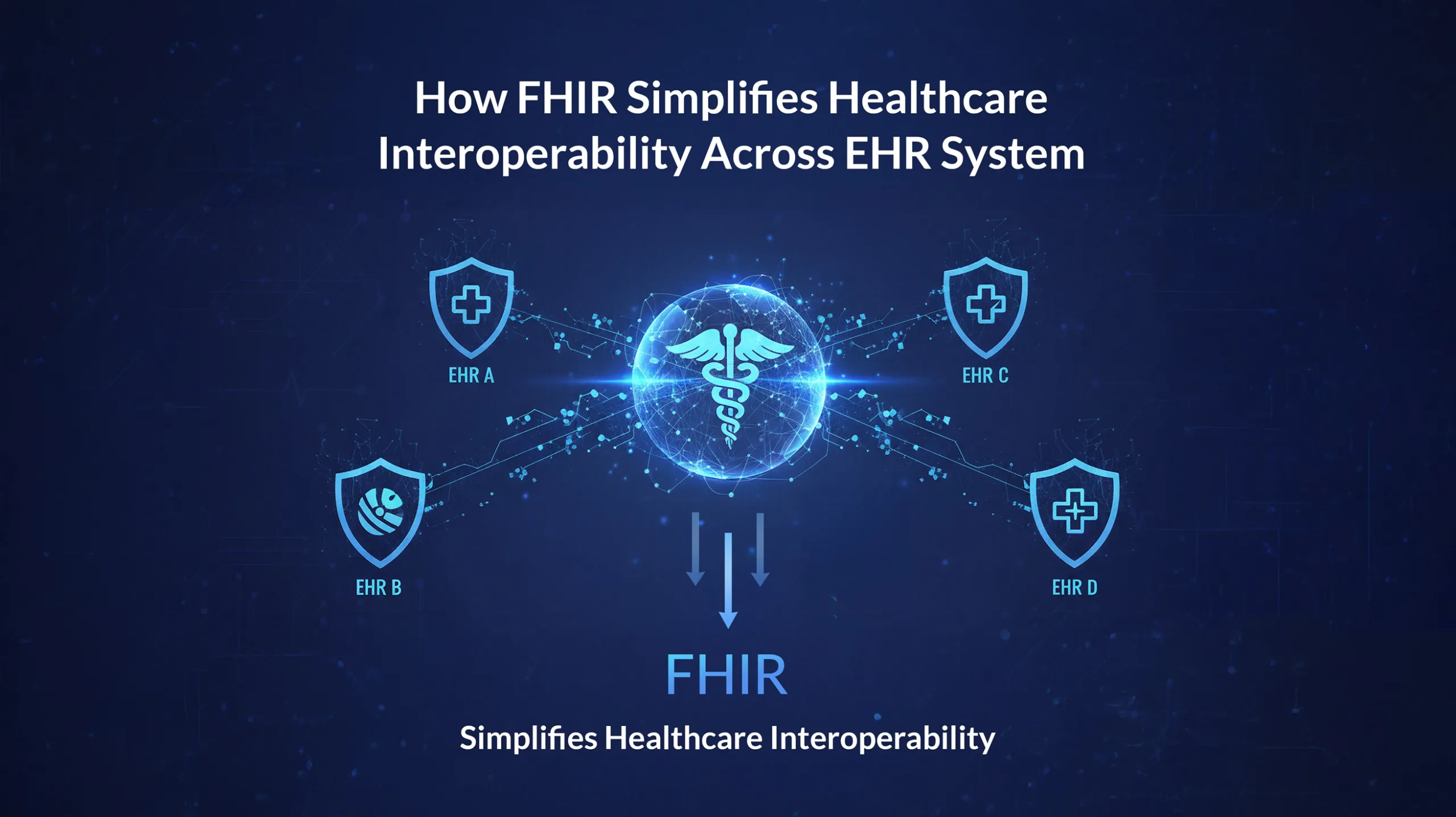
That’s where FHIR (Fast Healthcare Interoperability Resources) steps in. Developed by HL7 International, FHIR is transforming the future of EHR data exchange. It provides secure, real-time, and standardized communication across different systems, applications, and care settings.
At MediNoteX AI, we use the HL7 FHIR standard to ensure seamless and secure patient-data flow across platforms. This enables smarter, coordinated, and truly patient-centered care experiences.
The Challenge of Interoperability
For decades, healthcare systems relied on older standards like HL7 v2, HL7 v3, and CDA (Clinical Document Architecture). While they were groundbreaking in their time, these formats were complex, inflexible, and required costly custom integrations.
For example, two hospitals might store the same patient’s allergy details in completely different formats, making it nearly impossible for their systems to “speak the same language.” The result? Incomplete records, redundant tests, and slower care delivery.
FHIR solves this by offering a modern, web-based framework built for FHIR healthcare interoperability, allowing systems to communicate via RESTful APIs, JSON, and XML. This bridges the gap between EHR platforms and modern digital tools that support clinical workflows.
What Makes FHIR Different
FHIR merges the best of traditional HL7 standards with the simplicity of modern web design. Here’s why platforms like MediNoteX AI are leveraging it to deliver smarter care:
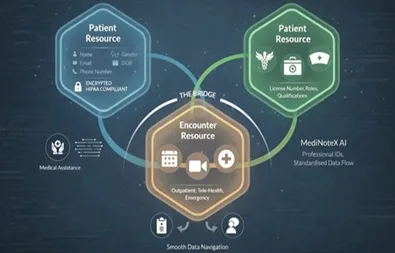
- Modular “Resources”: It breaks information into reusable building blocks called resources (like Patient, Practitioner, and Encounter), making it easy to integrate and scale.
- Security and Compliance: FHIR supports encryption and aligning with global standards such as HIPAA and GDPR.
- Built for Interoperability: It ensures healthcare systems can interpret and use data without translation errors, enabling seamless integration with AI medical scribe services for accurate clinical documentation.
At the same time, FHIR empowers advanced Medical assistant AI solutions to support clinicians with real-time insights, decision support, and workflow automation.
The HL7 FHIR standard empowers developers, clinicians, and healthcare platforms to build scalable, interoperable components efficiently
Core FHIR Resources Enabling Seamless Integration
Real-World Benefits of Adopting FHIR
The adoption of FHIR has unlocked a range of tangible benefits for healthcare providers using MediNoteX AI:
- Consistent Data: All systems speak the same language, reducing duplication and confusion.
- Faster Integration: FHIR APIs drastically cut down integration time compared to legacy HL7 interfaces.
- Enhanced Security: Encrypted storage and strict access controls keep sensitive health data protected.
- Scalable Architecture: As needs grow, additional resources like Medication, Observation, or Condition can be added effortlessly.
- Enabling Innovation: Enables AI-driven documentation and care-support systems to integrate seamlessly with EHRs.
FHIR in Action: A Quick Example
Imagine a patient named Sarah visits a local clinic for a check-up, then later schedules an online consultation with a specialist in another city. Both providers use different EHR platforms. Without FHIR, sharing her information securely and accurately would require manual effort—or might not happen at all. With FHIR, both systems can exchange standardized resources:
Sarah’s details → Patient Resource
Her doctor → Practitioner Resource
Her visit → Encounter Resource
This allows real-time, standardized sharing across systems, ensuring continuity and accuracy in care—core to FHIR healthcare interoperability.
The Future of Healthcare Interoperability
FHIR isn’t just a technical upgrade—it’s a paradigm shift. As more hospitals, digital health startups, and AI-powered healthcare solutions adopt it, data will flow more securely and intelligently across the entire care ecosystem.
With MediNoteX AI, we’re already seeing how FHIR enables real-time, accurate, and privacy-focused data exchange. This empowers care teams to make informed decisions, streamline workflows, and enhance patient experiences—whether care happens in a hospital, clinic, or remotely.
Conclusion
Interoperability is now essential—not optional. FHIR simplifies the path toward connected, intelligent healthcare systems by enabling:
- Standardized and secure EHR integration
- Real-time data access across providers
- Scalable clinical-workflow automation
By building with the HL7 FHIR standard, MediNoteX AI is helping shape a future where healthcare systems communicate effortlessly – delivering safer, faster, and more coordinated patient care.
Connecting care, protecting trust – with FHIR at the core. Discover how MediNoteX AI simplifies interoperability with FHIR. Request a Demo