

Adaptive AI for Clinical Documentation That Learns From Real-World Use
MediNoteX AI is designed to continuously improve clinical documentation performance by learning from supported user corrections and adapting to different accents, speech patterns, and medical terminology.
The more naturally healthcare professionals use the system, the better the documentation workflow can become within its supported adaptive capabilities.

Make Clinical AI More Adaptive
Healthcare conversations are not standardized.
Doctors speak at different speeds. They use different accents, terminology, abbreviations, and communication patterns. Different specialties also use different medical vocabulary.
MediNoteX AI is designed to address these variations through adaptive capabilities that use user feedback and speech-pattern information to improve transcription and documentation performance.
- Learn from supported user corrections
- Improve transcription accuracy over time
- Adapt to different accents
- Adapt to speech patterns
- Handle medical terminology
- Improve documentation performance through feedback
How Adaptive AI Works
Conduct the Consultation
The clinician communicates naturally with the patient.
Capture the Conversation
This medical scribing software processes the clinical conversation.
Transcribe the Conversation
The system converts spoken information into text.
Generate Clinical Documentation
Relevant information is organized into structured documentation.
Review the Output
The clinician reviews the generated information.
Correct Inaccuracies
The clinician makes necessary corrections.
Learn From Supported Feedback
Relevant corrections contribute to the supported adaptive improvement process.
Improve Future Performance
The system can progressively adapt to recurring patterns and terminology.
Adaptive AI for Clinical Documentation
Turn User Feedback Into Better Documentation
AI performance can improve when systems are exposed to relevant feedback.
This medical record management system is designed to use supported user corrections as part of its continuous improvement approach, helping improve transcription and documentation accuracy over time.
Instead of treating every consultation as an isolated interaction, adaptive capabilities can help address recurring patterns.
- Learn from user corrections
- Improve transcription performance
- Identify recurring correction patterns
- Support continuous improvement
- Reduce repeated documentation corrections
- Improve the clinical documentation experience

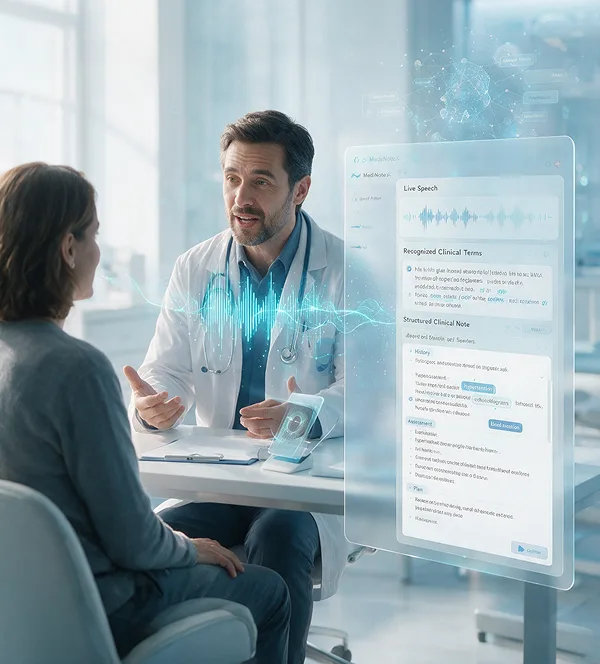
Accent & Speech Pattern Adaptation
Designed for the Way Healthcare Professionals Actually Speak
Healthcare professionals come from different linguistic and cultural backgrounds.
Differences in pronunciation, accent, speech patterns, pace, and terminology can affect speech recognition.
MediNoteX AI is designed to adapt to these variations to support more accurate clinical transcription and documentation.
- Support different accents
- Adapt to different speech patterns
- Handle clinical terminology
- Improve recognition of recurring terminology
- Support natural clinical conversations
- Reduce unnecessary changes to the clinician’s speaking style
Built to Improve With Real Clinical Use
AI Should Adapt to the Workflow. Not Force the Workflow to Adapt to AI.
The software is designed to support clinicians with AI that can become more responsive to structured feedback and recurring clinical communication patterns.
- Adaptive – Uses supported feedback to improve future performance.
- Responsive – Accounts for different accents and speech patterns.
- Clinical-Aware – Designed to work with medical terminology and clinical conversations.
- Clinician-Controlled – Healthcare professionals remain responsible for reviewing generated documentation.
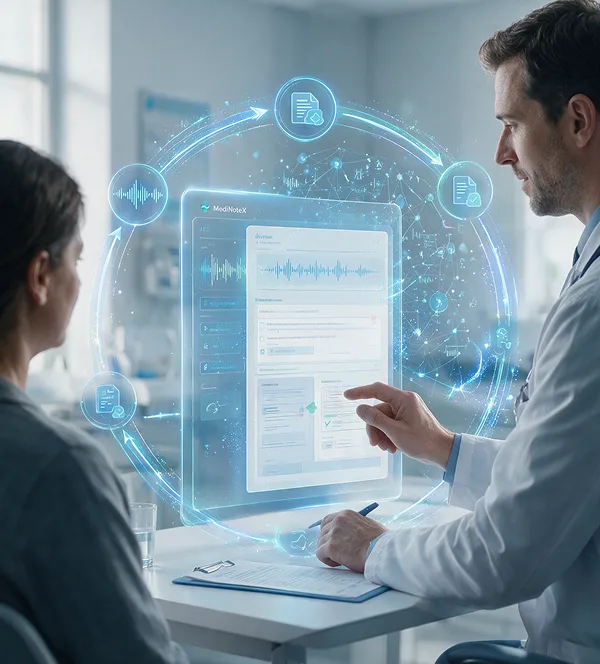
Key Benefits of Adaptive AI
The platform helps create a documentation experience that can improve through real-world usage and feedback.

Improve Transcription Accuracy
Use supported corrections to help improve transcription performance over time.
Improve Transcription Accuracy
Use supported corrections to help improve transcription performance over time.

Adapt to Accents
Support different accents encountered across healthcare environments.
Adapt to Accents
Support different accents encountered across healthcare environments.

Adapt to Speech Patterns
Improve recognition of recurring ways healthcare professionals communicate.
Adapt to Speech Patterns
Improve recognition of recurring ways healthcare professionals communicate.

Support Medical Terminology
Handle specialized terminology within the clinical documentation workflow.
Support Medical Terminology
Handle specialized terminology within the clinical documentation workflow.

Reduce Repetitive Corrections
Help address recurring transcription and terminology issues.
Reduce Repetitive Corrections
Help address recurring transcription and terminology issues.
Improve User Experience
Create an AI documentation workflow that becomes better aligned with real clinical usage.
Improve User Experience
Create an AI documentation workflow that becomes better aligned with real clinical usage.
Maintain Clinical Oversight
Keep clinicians responsible for reviewing and correcting generated documentation.
Maintain Clinical Oversight
Keep clinicians responsible for reviewing and correcting generated documentation.
Designed for Different Healthcare Workflows

Primary Care
Support frequent consultations where recurring terminology and speech patterns can be learned from usage.
Specialty Clinics
Support specialty-specific medical terminology and clinical communication patterns.

Hospitals
Adapt to different clinicians, departments, and clinical communication styles.
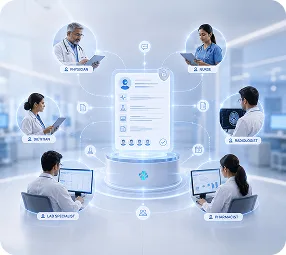
Multi-Disciplinary Care
Support different healthcare professionals with varied terminology and speech patterns.

Multilingual Healthcare Environments
Support diverse accents, language requirements, and communication patterns within supported capabilities.
Why Adaptive AI Matters
Healthcare professionals should not have to change the way they naturally communicate just to use clinical AI.
Every clinician has a different voice, accent, speaking style, vocabulary, and clinical terminology.
A static documentation system may repeatedly make the same types of errors.
This adaptive AI for clinical documentation is designed to use supported feedback and recurring patterns to improve the documentation experience over time.
The objective is simple: create an AI documentation experience that becomes better aligned with real clinical usage while keeping clinicians in control.
Frequently Asked Questions
Adaptive AI refers to capabilities designed to use supported user feedback and corrections to improve transcription and documentation performance over time.
Yes. Supported user corrections can contribute to the continuous improvement process.
Yes. The software is designed to support different accents and adapt to speech variations within its supported capabilities.
Yes. The adaptive capabilities are designed to account for different speech patterns and recurring communication characteristics.
Yes. It is designed for healthcare documentation workflows and supports medical terminology within its AI transcription and documentation capabilities.
Not necessarily. Adaptive behavior depends on the underlying AI architecture and implementation. The exact mechanism may involve supported feedback, personalization, terminology adaptation, or other configured approaches.
No. Clinicians should continue to review and validate AI-generated documentation before finalizing clinical records.
No. Adaptive AI assists with transcription and documentation. Clinical decisions and final documentation approval remain with the appropriate healthcare professional.

Bring adaptive clinical AI into your healthcare documentation workflow with MediNoteX AI.