

Build Clinical Workflows Around Customisable Clinical Documentation Software
MediNoteX AI provides flexible documentation capabilities that allow healthcare organizations to tailor clinical templates, documentation formats, and language workflows according to their specialties, departments, and operational requirements.
Create documentation that fits your clinical workflow instead of adapting your workflow to rigid documentation formats.
Make Clinical Documentation Fit Your Workflow
Healthcare organizations do not all document patient encounters in the same way.
Different specialties, departments, clinicians, and healthcare organizations may require different documentation structures, terminology, and reporting formats.
This clinical records management system supports this variation by providing customizable medical templates and multilingual capabilities that can be adapted to different clinical documentation needs.
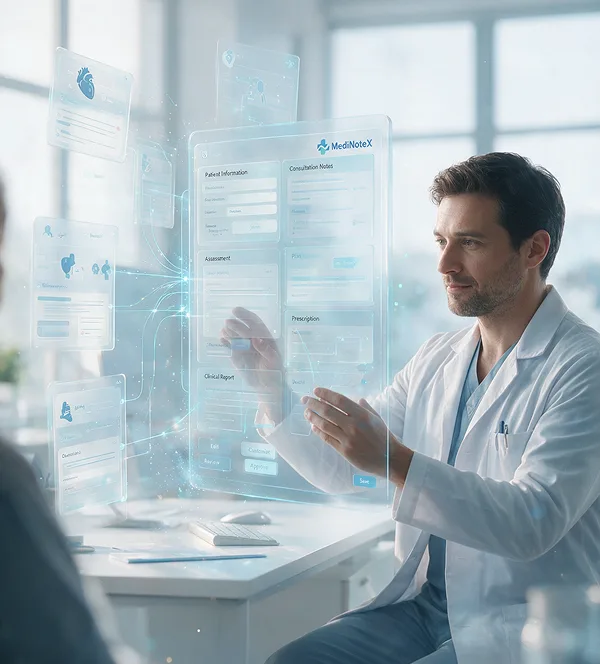
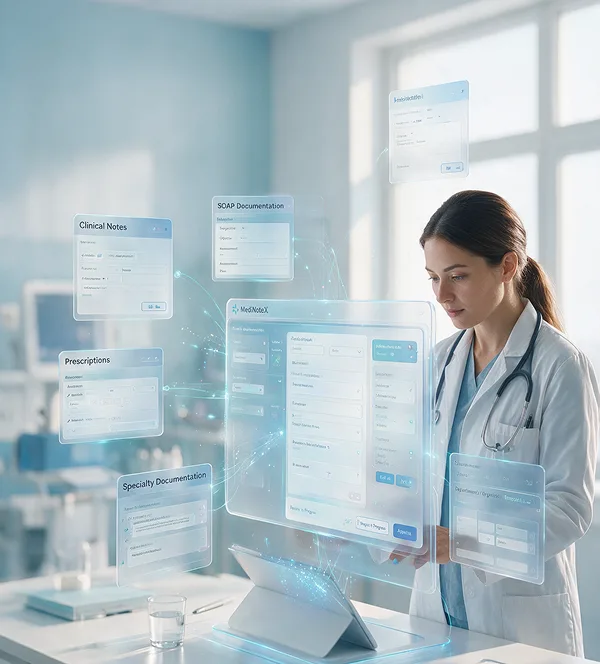
From consultation notes and SOAP documentation to prescriptions and clinical reports, MediNoteX AI helps healthcare teams create documentation that aligns with their workflows.
- Configure documentation according to organizational requirements
- Use templates for different clinical documentation needs
- Adapt documentation for different specialties and workflows
- Support multilingual clinical documentation
- Maintain consistent documentation structures
- Allow clinicians to review and modify generated content
How Clinical Customization Works
Define Documentation Requirements
The healthcare organization identifies the documentation formats and structures required for its clinical workflows.
Configure Templates
Templates can be structured around specific documentation requirements, specialties, or organizational preferences.
Select the Appropriate Template
The relevant template can be used based on the consultation or documentation workflow.
Capture Clinical Information
The system processes the relevant information from the consultation.
Generate Structured Documentation
AI organizes the information according to the selected documentation structure.
Review & Finalize
The clinician reviews, edits, and finalizes the generated documentation.
Customizable Medical Templates
Create Documentation That Matches Your Clinical Requirements
Different healthcare workflows require different documentation formats.
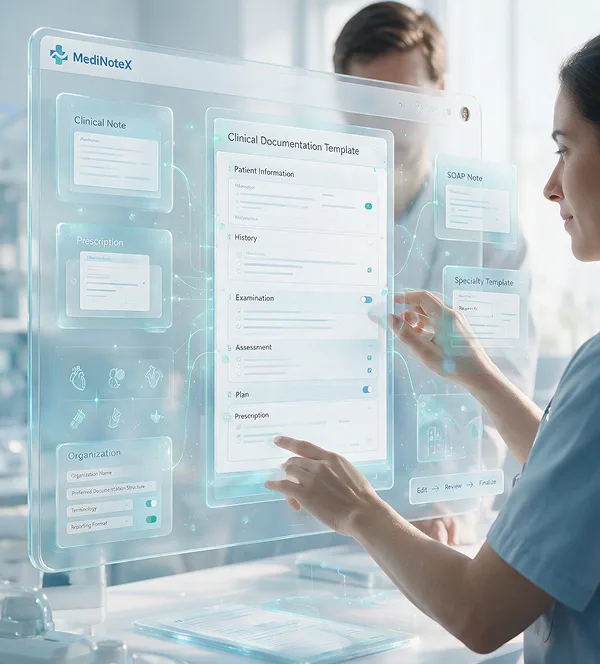
MediNoteX AI supports customizable medical templates that can be adapted for clinical notes, SOAP documentation, prescriptions, reports, and other healthcare documentation requirements.
Instead of forcing every clinician or department to use the same documentation structure, organizations can create workflows that better reflect their clinical and operational needs.
- Customizable clinical documentation templates
- Templates for different documentation requirements
- Specialty-oriented documentation structures
- Organization-specific documentation formats
- Structured SOAP note templates
- Prescription and clinical report templates
- Editable and reviewable generated documentation
Multilingual Support
Support Diverse Healthcare Environments
Healthcare organizations serve patients and professionals from different linguistic backgrounds.
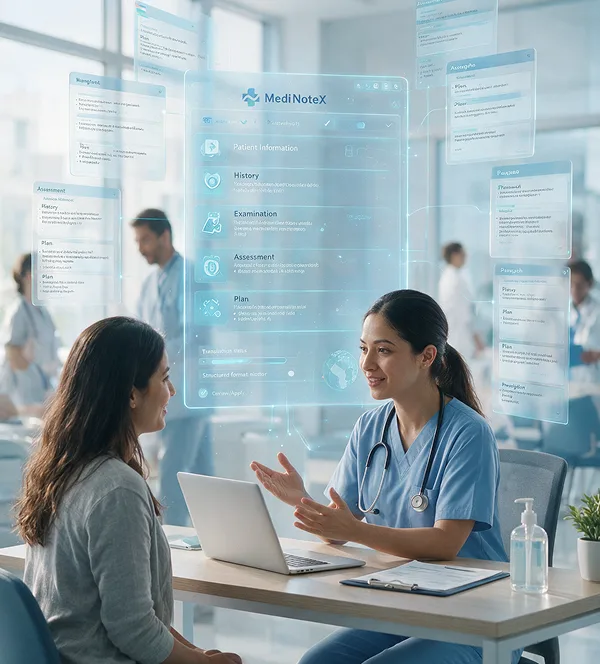
This customisable clinical documentation software provides multilingual support to help healthcare teams work with documentation across different languages and healthcare environments.
This can help organizations support more diverse patient populations while maintaining a structured documentation workflow.
- Support documentation in multiple languages
- Support diverse patient populations
- Improve accessibility across multilingual healthcare environments
- Maintain structured documentation across supported languages
- Reduce language-related documentation barriers
- Support healthcare organizations serving diverse communities
Built Around Your Clinical Workflow
Configure Documentation Around the Way Your Organization Works.
MediNoteX AI is designed to support healthcare organizations with different specialties, departments, and documentation requirements.
The platform provides flexibility while keeping clinicians in control of the final documentation.
- Customizable – Documentation structures can be adapted to organizational requirements.
- Flexible – Templates can support different clinical workflows and specialties.
- Multilingual – Supports documentation requirements across different languages.
- Clinician-Controlled – Clinicians review and modify generated documentation before finalization.
Key Benefits of Clinical Customization
A medical record management system helps organizations create documentation workflows that are more aligned with their actual clinical requirements.

Improve Documentation Flexibility
Adapt documentation structures according to clinical and organizational needs.
Improve Documentation Flexibility
Adapt documentation structures according to clinical and organizational needs.

Support Different Specialties
Use documentation formats that can accommodate different clinical workflows.
Support Different Specialties
Use documentation formats that can accommodate different clinical workflows.

Reduce Manual Formatting
Minimize repetitive restructuring of clinical documentation.
Reduce Manual Formatting
Minimize repetitive restructuring of clinical documentation.

Improve Documentation Consistency
Use standardized templates across relevant workflows.
Improve Documentation Consistency
Use standardized templates across relevant workflows.

Support Multilingual Environments
Enable documentation workflows for diverse healthcare populations.
Support Multilingual Environments
Enable documentation workflows for diverse healthcare populations.
Improve Workflow Adoption
Give healthcare teams documentation formats that better match their existing processes.
Improve Workflow Adoption
Give healthcare teams documentation formats that better match their existing processes.
Scale Across Departments
Support different documentation requirements within the same healthcare organization.
Scale Across Departments
Support different documentation requirements within the same healthcare organization.
Designed for Different Healthcare Workflows
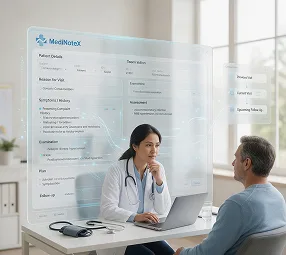
Primary Care
Use structured documentation templates for routine consultations and follow-ups.
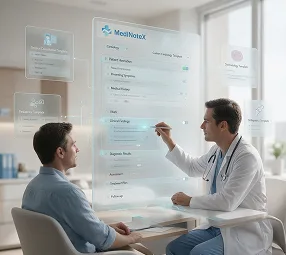
Specialty Clinics
Adapt documentation formats to specialty-specific clinical requirements.
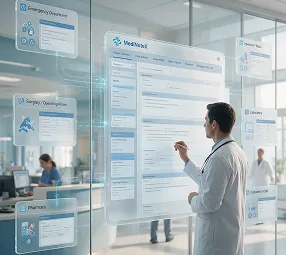
Hospitals
Support different documentation workflows across departments and clinical teams.
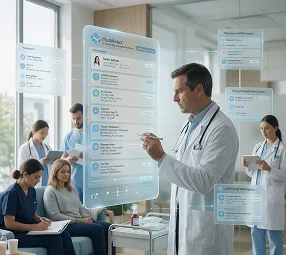
Multi-Disciplinary Care
Create documentation structures that can support different healthcare professionals.
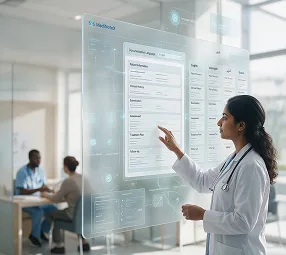
Multilingual Healthcare Environments
Support documentation workflows for diverse language requirements.
Why Clinical Flexibility Matters
Healthcare documentation is not one-size-fits-all.
A primary care consultation may require a different documentation structure from a specialist consultation, hospital assessment, or follow-up visit.
Rigid documentation workflows can create additional administrative effort when clinicians need to repeatedly modify or restructure generated content.
MediNoteX AI helps organizations create more adaptable documentation workflows.
The objective is simple: provide flexible documentation without compromising structure and clinician oversight.
Frequently Asked Questions
Customizable medical templates allow healthcare organizations to structure clinical documentation according to their specialty, workflow, and organizational requirements.
Yes. Templates can be configured according to different documentation requirements and clinical workflows.
MediNoteX is designed to support documentation workflows across different clinical environments, allowing documentation structures to be adapted according to organizational and specialty requirements.
Yes. MediNoteX includes multilingual support for healthcare environments serving diverse patient populations.
Yes. Clinicians can review and modify AI-generated documentation before finalizing the clinical record.
MediNoteX supports customizable clinical documentation structures, including SOAP-based documentation workflows.
Documentation workflows can be configured around organizational requirements using appropriate templates and structures.
No. Customization changes the documentation workflow and structure while clinicians remain responsible for reviewing and finalizing clinical documentation.
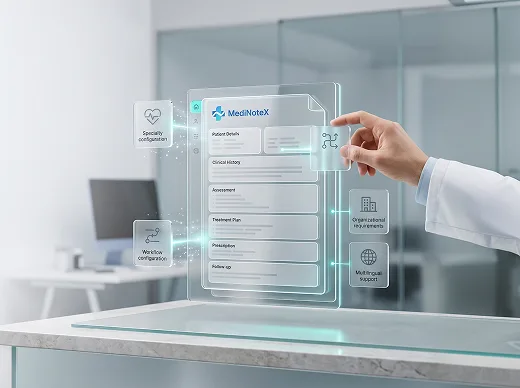
Build flexible clinical documentation workflows with Customisable clinical documentation software.