Artificial intelligence has already reshaped plenty of healthcare tasks, from sharpening diagnostic tools to cutting down hours of charting. But the tech is turning a major corner. What started as a simple assistant for repetitive, isolated tasks is turning into a true co-pilot-one that can run entire clinical and administrative processes with minimal hand-holding.
This shift from purely “assistive” AI to autonomous systems is quietly redefining how clinics and hospitals run day-to-day. Instead of just solving one minor headache at a time, modern platforms orchestrate whole workflows, helping care teams move faster, stay connected, and keep their eyes on the patient. AI-powered clinical documentation transforms real-time patient conversations into structured medical records, helping clinicians maintain comprehensive documentation while staying focused on patient care.
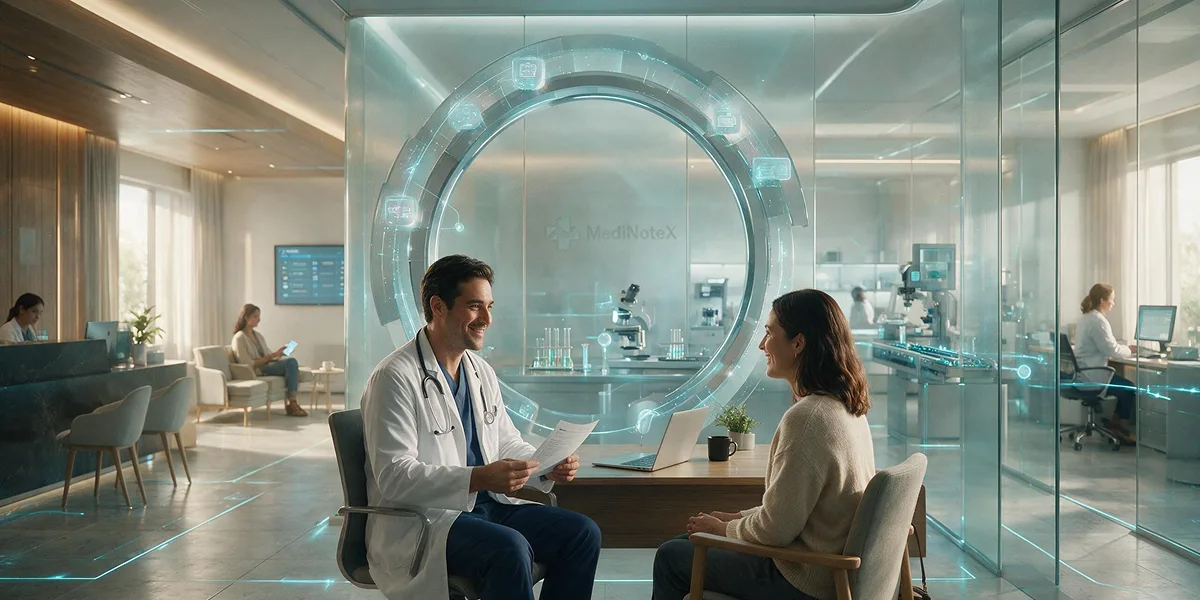
MediNoteX AI by PIT Solutions leads this shift. By combining an AI medical scribe, intelligent clinical documentation software, and smart AI healthcare workflow automation, it brings the whole patient journey together into one smooth dashboard.
From Assistive AI to Autonomous Healthcare Workflows
The first wave of healthcare software was all about support, not transformation. Early tools brought us basic speech recognition, transcription, and automated note summaries. While these tools definitely shaved minutes off chart-building, they mostly lived in isolation. Doctors got help with their notes, but front-office and clinical teams were still left manually coordinating appointments, firing lab orders, chasing billing codes, and making follow-up calls. While useful, simple assistant tools left the heavier operational burden untouched. AI Clinical Documentation marked a significant step forward in helping clinicians capture, structure, and document patient encounters more efficiently.
How Autonomous Healthcare AI Supports Clinical Workflows
Autonomous platforms look at the bigger picture. They don’t just log what happened during an exam-they know where that data needs to go next. A single consultation automatically triggers the next logical steps: updating chart notes, notifying the lab, queuing up billing, logging patient history, and scheduling the follow-up. Autonomous healthcare AI connects clinical insights with downstream actions, coordinating workflows across departments while ensuring that relevant patient information reaches the right systems at the right time.
Clinical documentation automation ensures that patient encounter details are captured, structured, and seamlessly integrated into downstream clinical and administrative workflows, minimizing manual effort and information gaps. This cuts out huge chunks of repetitive admin work without pushing clinicians out of the driver’s seat. The AI handles the logistics, so doctors can focus entirely on patient care.
Clinical Documentation Software and Healthcare Workflow Automation
The real hallmark of next-gen platforms is genuine AI healthcare workflow automation. Information flows naturally between departments instead of getting trapped in a single file or inbox. Right after a visit, the platform handles the downstream handoffs automatically:
- Generates detailed clinical documentation software and SOAP notes.
- Generates E-prescriptions.
- Fires off lab orders and organizes incoming reports.
- Syncs consultation and procedure billing codes.
- Updates longitudinal patient records.
- Surfaces past notes and test results for quick review.
AI clinical documentation seamlessly integrates with AI healthcare workflow automation, connecting patient documentation with downstream clinical and administrative tasks.
AI Medical Scribing That Adapts to Clinical Workflows
Good software should get smarter the more you use it. An advanced AI medical scribe learns from verbal corrections, adapts to individual charting habits, recognizes specialized jargon, and handles different accents or speaking speeds over time. AI-powered clinical documentation continuously refines note generation to align with individual clinician preferences, specialty-specific terminology, and established charting patterns. Autonomous healthcare AI goes beyond capturing conversations by intelligently interpreting clinical context, identifying relevant information, and supporting the next steps in documentation with minimal manual intervention. Instead of forcing doctors to change how they talk or chart, the system adapts to how they naturally work-dramatically reducing the time spent editing notes after hours. AI clinical documentation becomes more personalized over time, adapting to clinicians’ preferences, medical terminology, and documentation styles to improve efficiency and reduce editing time. Clinical documentation automation further enhances this process by minimizing repetitive documentation tasks and ensuring clinical notes are consistently structured and ready for integration into broader healthcare workflows.
Connecting Clinical Documentation and Patient Histories
Care isn’t just about a single appointment; it’s an ongoing story. Modern platforms connect every visit into a clear, searchable history that physicians can pull up in seconds.
With features like automated illness keyword mapping, centralized health histories, fast report retrieval, and side-by-side image comparisons, clinicians get immediate context without digging through miles of old records. That continuity leads to faster, more confident diagnoses and far more personalized care.
Healthcare Data Security and EHR/HIS Integration
As workflows become more connected, data protection becomes even more critical. A modern healthcare platform needs to build trust through rock-solid security and seamless system compatibility:
- Full HIPAA compliance.
- End-to-end encryption for Protected Health Information (PHI).
- Granular, role-based access permissions.
- Smooth performance across desktop, tablet, and mobile devices.
- Easy integration with existing HIS and EHR systems.
How MediNoteX AI Connects Clinical Documentation and Workflows
MediNoteX AI shows what happens when software evolves past basic transcription. The clinical documentation software handles real-time charting, while its automated back-end connects scheduling, lab orders, billing, image comparisons, and history tracking into one intuitive hub.
Rather than piling on another standalone app, it replaces fragmented tools with a single environment where administrative and clinical workflows work side-by-side.
The Future of Connected, AI-Assisted Healthcare
The goal of healthcare tech isn’t to replace doctors with algorithms-it’s to strip away the digital clutter so they can practice medicine without distraction.
By bringing together AI medical scribe tools, clinical documentation software, enterprise security, and AI healthcare workflow automation, MediNoteX AI gives clinics and hospitals the foundation to run a faster, smarter, and far more connected practice.
Ready to see what autonomous workflows can do for your clinic? Book a Demo today to experience how MediNoteX AI simplifies charting, automates daily processes, and connects the full patient journey.